Understanding the Geriatric Perspective
Constipation is one of the most common gastrointestinal complaints among older adults. Many seniors consider it a normal part of aging; however, persistent constipation should never be ignored. While occasional constipation may result from dietary changes, reduced physical activity, or medication use, chronic constipation can sometimes be an early warning sign of serious underlying conditions, including colorectal (colon) cancer. At GeroX®, we emphasize the importance of recognizing these warning signs early to promote healthy aging and prevent potentially life-threatening complications.
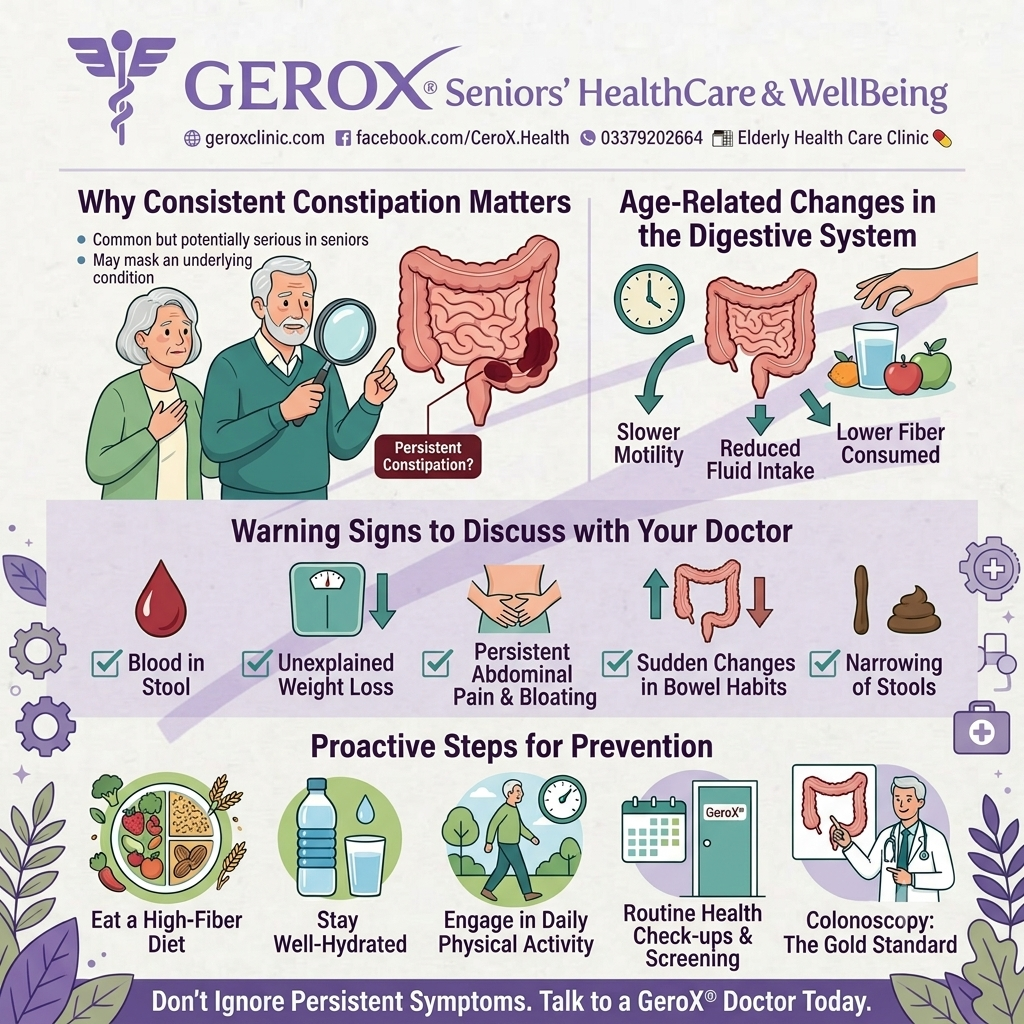
As people age, the digestive system undergoes several physiological changes. Gut motility slows down, abdominal muscle strength decreases, and fluid intake often becomes inadequate. Many older adults also consume less dietary fiber and engage in less physical activity, further increasing the likelihood of constipation. These age-related factors can lead to prolonged bowel transit time, making constipation a frequent concern among the elderly population.
Why Persistent Constipation Matters
Although constipation is common in older age, persistent or worsening constipation may indicate an underlying medical problem. Colon polyps, intestinal narrowing, and colorectal tumors can obstruct the normal passage of stool and alter bowel habits. In some cases, chronic constipation may be one of the earliest symptoms of colorectal cancer. Because colorectal cancer often develops gradually and may remain asymptomatic in its early stages, recognizing changes in bowel habits can play a crucial role in early diagnosis.
Early detection of colorectal cancer significantly improves treatment outcomes and survival rates. Therefore, any persistent change in bowel patterns, especially in individuals over 50 years of age, should be evaluated by a healthcare professional.
Risk Factors for Colon Cancer in Older Adults
Several factors increase the risk of colorectal cancer among seniors. Advancing age remains one of the strongest risk factors, with most cases occurring after the age of 60. A diet low in fiber and high in processed foods can contribute to both constipation and colorectal disease. Physical inactivity, obesity, smoking, and excessive alcohol consumption may further increase the risk.
Long-term use of laxatives without proper medical supervision can sometimes mask underlying gastrointestinal disorders. Additionally, individuals with a family history of colorectal cancer or colon polyps are at higher risk and may require earlier and more frequent screening.
Warning Signs That Require Medical Attention
Certain symptoms accompanying constipation should never be overlooked. The presence of blood in the stool, either visible or detected through testing, requires prompt medical evaluation. Unexplained weight loss, persistent abdominal pain, bloating, fatigue, and sudden changes in bowel habits may also indicate serious underlying pathology.
Older adults who experience alternating episodes of constipation and diarrhea, narrowing of stools, or a feeling of incomplete bowel emptying should seek medical advice without delay. Early investigation can help identify treatable conditions before complications develop.
Prevention and Healthy Aging
Maintaining digestive health is an important component of healthy aging. Consuming a diet rich in fruits, vegetables, whole grains, and other high-fiber foods helps promote regular bowel movements. Adequate hydration and daily physical activity, such as walking, can improve intestinal motility and reduce the risk of constipation.
Routine health check-ups and age-appropriate cancer screening are equally important. Colonoscopy remains the gold standard for detecting colorectal cancer and precancerous polyps. Most healthcare guidelines recommend regular colorectal cancer screening beginning at age 50, or earlier for individuals with additional risk factors.
The GeroX® Approach
At GeroX®, we believe that proactive healthcare and early diagnosis are key to maintaining independence and quality of life in older adults. Persistent constipation should not be dismissed as a normal consequence of aging. Through education, screening, and comprehensive geriatric care, many serious gastrointestinal conditions can be detected and managed effectively.
If you or a loved one experiences ongoing constipation or any warning signs of colorectal disease, seek medical advice promptly. Timely intervention can save lives and support healthier aging.
GeroX® – Caring for Seniors’ Digestive Health, Wellness, and Healthy Aging.
GeroX® – قبض اور بڑی آنت کا کینسر: بزرگ افراد میں ایک خاموش خطرہ
بزرگوں میں قبض
قبض بزرگ افراد میں نظامِ ہاضمہ سے متعلق سب سے عام شکایات میں سے ایک ہے۔ بہت سے لوگ اسے عمر بڑھنے کا ایک معمولی حصہ سمجھتے ہیں، لیکن مسلسل یا شدید قبض کو کبھی بھی نظر انداز نہیں کرنا چاہیے۔ اگرچہ بعض اوقات قبض کم پانی پینے، نامناسب غذا، جسمانی سرگرمی میں کمی یا بعض ادویات کے استعمال کی وجہ سے ہوتی ہے، لیکن بعض صورتوں میں یہ بڑی آنت کے کینسر سمیت کسی سنگین بیماری کی ابتدائی علامت بھی ہو سکتی ہے۔ GeroX® بزرگ افراد کی صحت کے تحفظ کے لیے ان علامات کی بروقت پہچان اور تشخیص کی اہمیت پر زور دیتا ہے۔
عمر کے ساتھ نظامِ ہاضمہ کی کارکردگی میں قدرتی تبدیلیاں رونما ہوتی ہیں۔ آنتوں کی حرکت سست ہو جاتی ہے، پیٹ کے عضلات کمزور پڑ جاتے ہیں، اور اکثر افراد پانی اور فائبر کی مناسب مقدار استعمال نہیں کرتے۔ جسمانی سرگرمی میں کمی بھی قبض کے خطرے کو بڑھا دیتی ہے۔ ان عوامل کے نتیجے میں پاخانے کا اخراج مشکل ہو جاتا ہے اور قبض ایک مستقل مسئلہ بن سکتی ہے۔
مسلسل قبض کیوں؟
اگر قبض بار بار ہو یا طویل عرصے تک برقرار رہے تو یہ کسی بنیادی بیماری کی نشاندہی کر سکتی ہے۔ بڑی آنت میں رسولیاں، پولپس یا کینسر آنتوں کے راستے میں رکاوٹ پیدا کر سکتے ہیں جس سے پاخانے کی عادت تبدیل ہو جاتی ہے۔ بعض اوقات بڑی آنت کے کینسر کی ابتدائی علامات میں مسلسل قبض بھی شامل ہوتی ہے۔
چونکہ بڑی آنت کا کینسر ابتدائی مراحل میں خاموشی سے نشوونما پاتا ہے، اس لیے پاخانے کی عادات میں تبدیلی کو سنجیدگی سے لینا ضروری ہے۔ بروقت تشخیص نہ صرف علاج کو آسان بناتی ہے بلکہ مریض کے زندہ رہنے کے امکانات بھی نمایاں طور پر بڑھا دیتی ہے۔
بزرگ افراد میں خطرے کے عوامل
بڑی آنت کے کینسر کے کئی خطرے کے عوامل ہیں۔ ساٹھ سال سے زائد عمر اس بیماری کا ایک اہم خطرہ ہے۔ کم فائبر والی غذا، جسمانی سرگرمی کی کمی، موٹاپا، تمباکو نوشی اور غیر صحت مند طرزِ زندگی اس خطرے کو مزید بڑھا سکتے ہیں۔
اسی طرح مسلسل جلاب کا استعمال بعض اوقات اصل بیماری کو چھپا دیتا ہے۔ جن افراد کے خاندان میں بڑی آنت کے کینسر یا پولپس کی تاریخ موجود ہو، انہیں خصوصی احتیاط اور باقاعدہ اسکریننگ کی ضرورت ہوتی ہے۔
کب فوری ڈاکٹر سے رجوع کرنا چاہیے؟
اگر قبض کے ساتھ پاخانے میں خون آئے، وزن تیزی سے کم ہونے لگے، پیٹ میں مسلسل درد یا گیس محسوس ہو، یا پاخانے کی عادات میں اچانک تبدیلی آ جائے تو فوری طور پر ڈاکٹر سے مشورہ کرنا چاہیے۔ اسی طرح اگر پاخانہ باریک ہو جائے، مکمل اخراج نہ ہونے کا احساس رہے، یا قبض اور اسہال باری باری ہوتے رہیں تو یہ علامات طبی معائنے کی متقاضی ہیں۔
بروقت تشخیص سے نہ صرف بڑی آنت کے کینسر بلکہ دیگر قابلِ علاج بیماریوں کی نشاندہی بھی ممکن ہوتی ہے۔
احتیاط اور بچاؤ
قبض اور بڑی آنت کی بیماریوں سے بچاؤ کے لیے متوازن غذا نہایت اہم ہے۔ روزمرہ خوراک میں پھل، سبزیاں، دالیں، اور فائبر سے بھرپور غذائیں شامل کرنی چاہئیں۔ مناسب مقدار میں پانی پینا اور روزانہ چہل قدمی یا ہلکی ورزش کرنا آنتوں کی کارکردگی بہتر بناتا ہے اور قبض کے امکانات کم کرتا ہے۔
اس کے علاوہ باقاعدہ طبی معائنہ اور بڑی آنت کی اسکریننگ بھی ضروری ہے۔ کولونوسکوپی بڑی آنت کے کینسر اور پولپس کی بروقت تشخیص کا بہترین طریقہ ہے۔ طبی ماہرین عام طور پر پچاس سال کی عمر کے بعد باقاعدہ کولونوسکوپی اور اسکریننگ کی سفارش کرتے ہیں، جبکہ خطرے والے افراد میں یہ جانچ پہلے بھی کی جا سکتی ہے۔
GeroX® کا پیغام
GeroX® کا یقین ہے کہ صحت مند بڑھاپا بروقت تشخیص، احتیاطی تدابیر اور جامع طبی نگہداشت سے ممکن ہے۔ مسلسل قبض کو عمر کا معمول سمجھ کر نظر انداز نہ کریں۔ یہ بعض اوقات بڑی آنت کے کینسر یا دیگر سنگین بیماریوں کی ابتدائی علامت ہو سکتی ہے۔
اگر آپ یا آپ کے کسی بزرگ عزیز کو مسلسل قبض، پاخانے میں خون، وزن میں کمی یا دیگر مشتبہ علامات کا سامنا ہے تو فوری طبی مشورہ حاصل کریں۔ بروقت تشخیص زندگی بچا سکتی ہے اور صحت مند، فعال اور باوقار بڑھاپے کو ممکن بناتی ہے۔
GeroX® – بزرگوں کی بہتر ہاضماتی صحت، نگہداشت اور خوشحال زندگی کے لیے آپ کا قابلِ اعتماد ساتھی۔