Healthy Cooking Oils and Fats for Healthy Aging: What to Use and What to Avoid
The foods we eat influence far more than our weight. They affect brain health, cardiovascular function, metabolic health, inflammation levels, hormone production, and the aging process itself. While much attention is often given to carbohydrates and protein, the type of fat used in everyday cooking is equally important. Choosing appropriate cooking fats can support healthy aging, while poor choices may contribute to chronic inflammation and metabolic dysfunction over time.
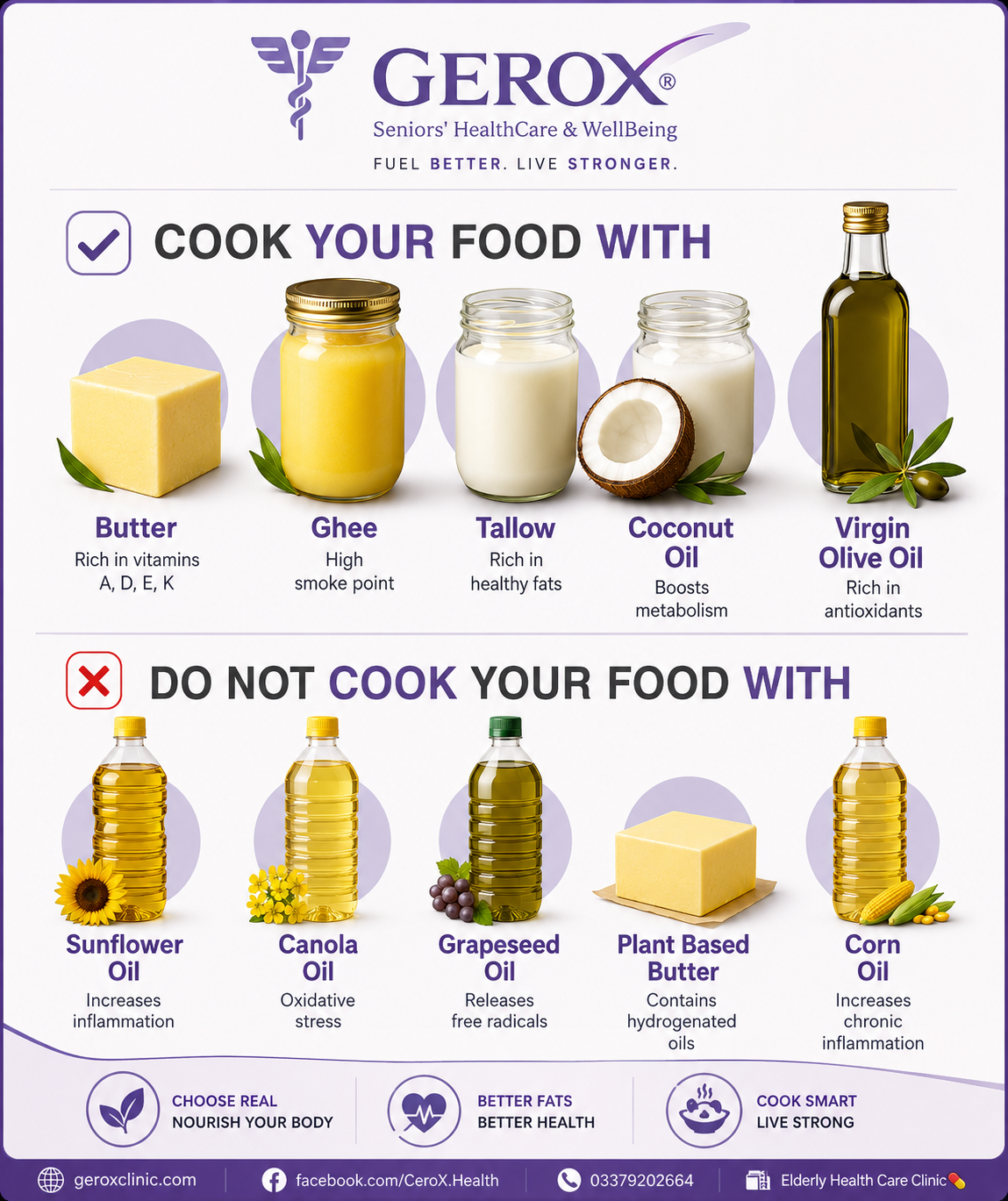
Traditional fats such as butter, ghee, tallow, coconut oil, and extra virgin olive oil have been used for generations in different cultures. These fats vary in their nutritional composition, but many provide valuable fat-soluble vitamins and offer greater stability during cooking compared to highly processed alternatives. Ghee, for example, has a relatively high smoke point, making it suitable for cooking at higher temperatures. Extra virgin olive oil contains beneficial polyphenols and antioxidants associated with cardiovascular health. Butter provides vitamins A, D, E, and K, while coconut oil and tallow remain relatively stable under heat due to their fatty acid composition.
In contrast, many industrially processed seed oils have become common ingredients in modern diets. Oils such as sunflower, corn, grapeseed, and certain refined vegetable oils are often subjected to extensive processing, bleaching, deodorization, and repeated heating during food manufacturing. While these oils contain unsaturated fats, excessive consumption of highly refined oils and repeated exposure to high cooking temperatures may increase oxidative stress and contribute to the formation of potentially harmful compounds.
The discussion surrounding seed oils has become increasingly controversial. It is important to recognize that no single food is solely responsible for disease or health. Overall dietary patterns, physical activity, sleep quality, stress management, and environmental factors all contribute to long-term well-being. However, prioritizing minimally processed foods and cooking fats that have a long history of traditional use remains a practical approach for many individuals seeking to support healthy aging.
For older adults, nutritional choices become even more important. Age-related changes in metabolism, muscle mass, cardiovascular health, hearing, cognition, and immune function require a comprehensive approach to nutrition. Selecting appropriate cooking fats should be viewed as one component of a broader longevity strategy that includes regular physical activity, adequate protein intake, social engagement, restorative sleep, and preventive healthcare.
At GeroX®, we encourage evidence-informed nutritional decisions that prioritize whole foods, moderation, and individual health needs. Healthy aging is not achieved through a single ingredient or dietary trend. Rather, it is the cumulative result of consistent daily choices that support resilience, vitality, and quality of life across the lifespan.
صحت مند بڑھاپے کے لیے بہتر کوکنگ آئلز اور چکنائیاں: کیا استعمال کریں اور کن چیزوں سے احتیاط کریں
ہم جو خوراک روزانہ استعمال کرتے ہیں وہ صرف ہمارے وزن کو متاثر نہیں کرتی بلکہ دماغی صحت، دل کی کارکردگی، میٹابولزم، سوزش کی سطح، ہارمونز اور عمر بڑھنے کے مجموعی عمل پر بھی اثر انداز ہوتی ہے۔ اگرچہ اکثر توجہ کاربوہائیڈریٹس اور پروٹین پر دی جاتی ہے، لیکن کھانا پکانے میں استعمال ہونے والی چکنائی بھی اتنی ہی اہم ہے۔ مناسب چکنائیوں کا انتخاب صحت مند بڑھاپے میں مددگار ثابت ہو سکتا ہے جبکہ نامناسب انتخاب طویل مدت میں دائمی سوزش اور میٹابولک مسائل کا باعث بن سکتا ہے۔
روایتی چکنائیاں جیسے مکھن، گھی، ٹیلو، ناریل کا تیل اور ایکسٹرا ورجن زیتون کا تیل صدیوں سے مختلف ثقافتوں میں استعمال ہوتی رہی ہیں۔ ان کی غذائی خصوصیات مختلف ہو سکتی ہیں لیکن یہ عموماً اہم چکنائی میں حل ہونے والے وٹامنز فراہم کرتی ہیں اور زیادہ تر پراسیس شدہ متبادل مصنوعات کے مقابلے میں پکانے کے دوران زیادہ مستحکم رہتی ہیں۔ گھی کا اسموک پوائنٹ نسبتاً بلند ہوتا ہے جس کی وجہ سے یہ زیادہ درجہ حرارت پر پکانے کے لیے موزوں سمجھا جاتا ہے۔ ایکسٹرا ورجن زیتون کے تیل میں موجود اینٹی آکسیڈنٹس اور پولی فینولز دل کی صحت کے لیے مفید سمجھے جاتے ہیں۔ مکھن وٹامن اے، ڈی، ای اور کے فراہم کرتا ہے جبکہ ناریل کا تیل اور ٹیلو گرمی کے دوران نسبتاً مستحکم رہتے ہیں۔
دوسری جانب جدید خوراک میں مختلف صنعتی طور پر تیار کردہ سیڈ آئلز کا استعمال بڑھ گیا ہے۔ سورج مکھی کا تیل، مکئی کا تیل، گریپ سیڈ آئل اور دیگر ریفائنڈ ویجیٹیبل آئلز اکثر کئی مراحل پر مشتمل پراسیسنگ سے گزرتے ہیں۔ اگرچہ ان میں غیر سیر شدہ چکنائیاں موجود ہوتی ہیں، لیکن ان کا حد سے زیادہ استعمال یا بار بار زیادہ درجہ حرارت پر استعمال آکسیڈیٹو اسٹریس میں اضافے اور بعض غیر مطلوب مرکبات کی تشکیل سے منسلک ہو سکتا ہے۔
سیڈ آئلز کے حوالے سے جاری بحث پیچیدہ ہے اور اس میں مختلف سائنسی آراء موجود ہیں۔ یہ سمجھنا ضروری ہے کہ کوئی ایک غذا اکیلے صحت یا بیماری کا فیصلہ نہیں کرتی۔ مجموعی غذائی عادات، جسمانی سرگرمی، نیند، ذہنی دباؤ اور ماحولیاتی عوامل سب مل کر طویل مدتی صحت پر اثر انداز ہوتے ہیں۔ اس کے باوجود کم سے کم پراسیس شدہ غذاؤں اور روایتی طور پر استعمال ہونے والی چکنائیوں کو ترجیح دینا ایک قابل عمل حکمت عملی ہو سکتی ہے۔
بزرگ افراد کے لیے غذائی انتخاب مزید اہم ہو جاتا ہے۔ عمر کے ساتھ میٹابولزم، عضلاتی طاقت، دل کی صحت، سماعت، یادداشت اور قوتِ مدافعت میں تبدیلیاں آتی ہیں جن کے لیے متوازن غذائیت ضروری ہے۔ مناسب کوکنگ آئلز اور چکنائیوں کا انتخاب صحت مند بڑھاپے کے ایک وسیع تر منصوبے کا حصہ ہونا چاہیے جس میں جسمانی سرگرمی، مناسب پروٹین، سماجی روابط، معیاری نیند اور احتیاطی طبی نگہداشت شامل ہوں۔
® GeroX میں ہم ایسی غذائی حکمت عملیوں کی حوصلہ افزائی کرتے ہیں جو سائنسی شواہد، اعتدال اور انفرادی ضروریات پر مبنی ہوں۔ صحت مند بڑھاپا کسی ایک سپر فوڈ یا وقتی رجحان کا نتیجہ نہیں بلکہ روزمرہ کے مستقل فیصلوں کا مجموعہ ہے جو زندگی بھر توانائی، خودمختاری اور بہتر معیارِ زندگی کو فروغ دیتے ہیں۔