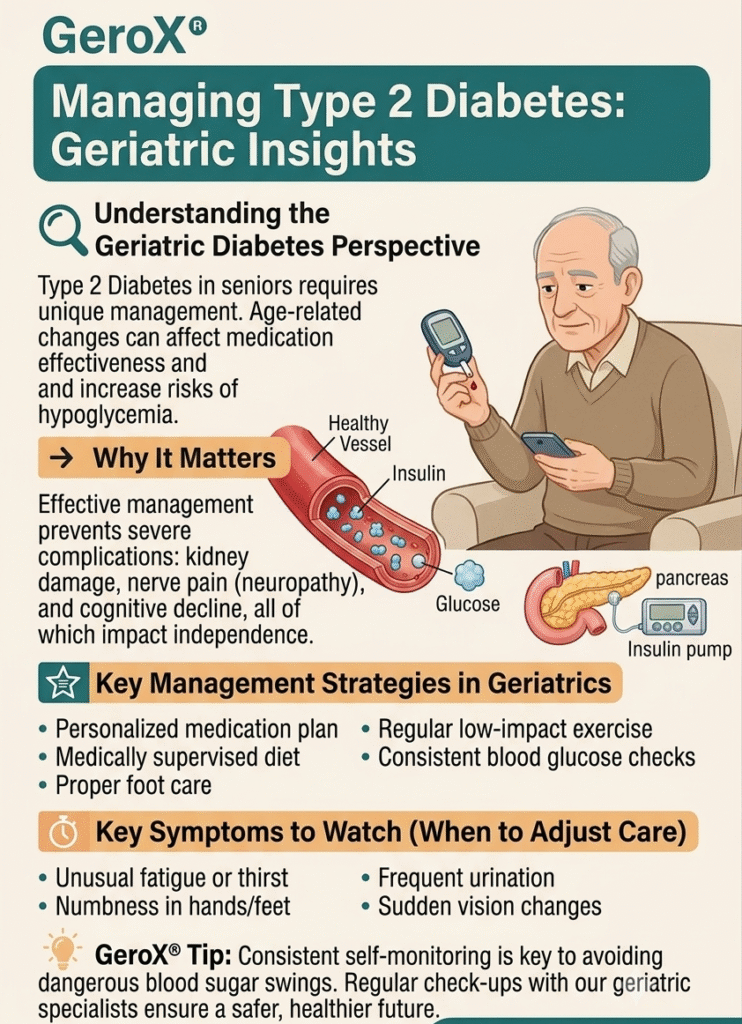
Diabetes has become one of the most common chronic health conditions affecting older adults worldwide, and Pakistan is no exception. As people age, natural changes occur in the body’s ability to regulate blood sugar levels. Reduced insulin sensitivity, decreased physical activity, and the presence of other age-related health conditions increase the likelihood of developing Type 2 Diabetes. For seniors, diabetes is more than just elevated blood sugar—it can significantly impact overall health, independence, and quality of life if not managed properly.
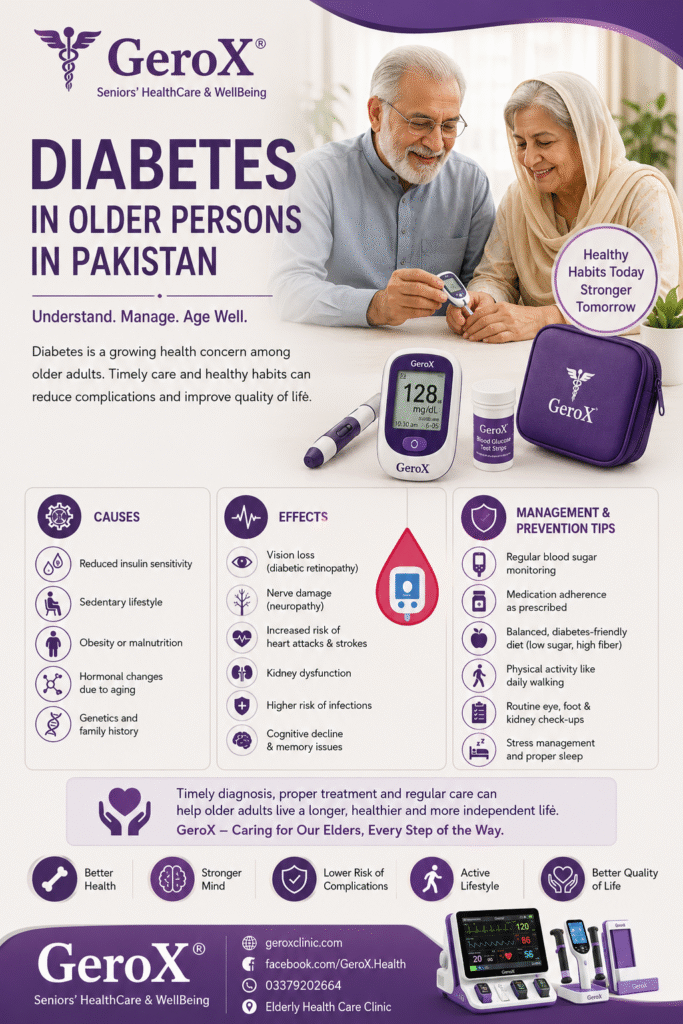
One of the primary reasons diabetes becomes more prevalent in older adults is the gradual decline in insulin sensitivity. Combined with sedentary lifestyles, obesity, nutritional deficiencies, hormonal changes, and a family history of diabetes, these factors contribute to the development and progression of the disease. Many older adults may also experience subtle symptoms, causing delayed diagnosis and increasing the risk of complications.
Poorly controlled diabetes can affect multiple organs and body systems. Elevated blood glucose levels over time can damage the delicate blood vessels of the eyes, leading to diabetic retinopathy and vision impairment. Nerve damage, known as diabetic neuropathy, may cause numbness, tingling, pain, or loss of sensation in the hands and feet. Diabetes also substantially increases the risk of cardiovascular diseases, including heart attacks and strokes, which remain leading causes of disability and mortality among seniors.
The impact of diabetes extends beyond the heart and nerves. Chronic high blood sugar can gradually impair kidney function, potentially leading to chronic kidney disease. Older adults with diabetes are also more susceptible to infections due to weakened immune responses. Emerging evidence further suggests a link between diabetes and cognitive decline, including memory problems and an increased risk of dementia, making comprehensive diabetes management essential for healthy aging.
Fortunately, diabetes can often be effectively managed through a combination of lifestyle modifications, regular monitoring, and appropriate medical care. Routine blood sugar monitoring helps identify fluctuations and ensures treatment remains effective. Taking medications exactly as prescribed by healthcare professionals is critical for preventing complications and maintaining optimal glucose control.
Nutrition plays a central role in diabetes management. Older adults should focus on a balanced, diabetes-friendly diet rich in fiber, vegetables, whole grains, lean proteins, and healthy fats while limiting sugary beverages, refined carbohydrates, and processed foods. Proper hydration and portion control are equally important in maintaining stable blood sugar levels throughout the day.
Physical activity remains one of the most effective tools for managing diabetes in later life. Simple activities such as daily walking, stretching exercises, light resistance training, or chair-based exercises can improve insulin sensitivity, support cardiovascular health, and enhance overall mobility and independence. Even modest increases in activity can produce meaningful health benefits.
Preventive healthcare is equally important. Regular eye examinations, foot assessments, kidney function testing, and cardiovascular evaluations allow healthcare providers to identify complications at an early stage. Stress management, adequate sleep, social engagement, and emotional wellbeing also contribute significantly to better diabetes control and improved quality of life among older adults.
Timely diagnosis, personalized treatment plans, and comprehensive geriatric care can substantially reduce the burden of diabetes-related complications. Through education, preventive care, and ongoing support, older adults can continue to lead active, healthy, and fulfilling lives. At GeroX®, we believe that healthy aging begins with awareness, proactive healthcare, and compassionate support for every senior.
GeroX® – بڑھاپے میں ذیابیطس کی وجوہات، اثرات اور احتیاط
ذیابیطس پاکستان سمیت پوری دنیا میں بزرگ افراد کی صحت کے لیے ایک اہم چیلنج بن چکی ہے۔ عمر بڑھنے کے ساتھ جسم میں گلوکوز کو کنٹرول کرنے کی صلاحیت متاثر ہوتی ہے، انسولین کی حساسیت کم ہو جاتی ہے، اور جسمانی سرگرمی میں کمی واقع ہوتی ہے۔ یہی عوامل بڑی عمر کے افراد کو ٹائپ 2 ذیابیطس کے خطرے سے دوچار کرتے ہیں۔ اگر اس بیماری کی بروقت تشخیص اور مناسب دیکھ بھال نہ کی جائے تو یہ زندگی کے معیار اور روزمرہ کی خودمختاری کو متاثر کر سکتی ہے۔
عمر رسیدہ افراد میں ذیابیطس کی کئی وجوہات ہو سکتی ہیں۔ انسولین کے اثر میں کمی، بیٹھے رہنے کا طرز زندگی، موٹاپا یا غذائی کمی، عمر کے ساتھ ہونے والی ہارمونی تبدیلیاں، اور خاندانی یا جینیاتی عوامل اس بیماری کے خطرے کو بڑھاتے ہیں۔ بعض اوقات علامات واضح نہیں ہوتیں جس کی وجہ سے بیماری دیر سے تشخیص ہوتی ہے اور پیچیدگیوں کا امکان بڑھ جاتا ہے۔
غیر متوازن شوگر جسم کے مختلف اعضاء کو متاثر کر سکتی ہے۔ آنکھوں کی باریک خون کی نالیوں کو نقصان پہنچنے سے بینائی کمزور ہو سکتی ہے یا نابینا پن کا خطرہ پیدا ہو سکتا ہے۔ اعصابی کمزوری یا نیوروپیتھی کے باعث ہاتھوں اور پیروں میں سن ہونا، جھنجھناہٹ یا درد محسوس ہو سکتا ہے۔ اسی طرح ذیابیطس دل کے دورے اور فالج کے خطرات میں نمایاں اضافہ کرتی ہے، جو بزرگ افراد میں معذوری اور اموات کی بڑی وجوہات میں شمار ہوتے ہیں۔
ذیابیطس گردوں کی کارکردگی کو بھی متاثر کر سکتی ہے اور وقت کے ساتھ گردوں کی دائمی بیماری کا سبب بن سکتی ہے۔ اس کے علاوہ قوتِ مدافعت کمزور ہونے کی وجہ سے انفیکشنز کا خطرہ بڑھ جاتا ہے۔ جدید تحقیق یہ بھی ظاہر کرتی ہے کہ ذیابیطس یادداشت کی کمزوری، ذہنی کارکردگی میں کمی اور بعض صورتوں میں ڈیمنشیا کے خطرات سے بھی منسلک ہو سکتی ہے۔
خوش آئند بات یہ ہے کہ مناسب احتیاط اور نگہداشت کے ذریعے ذیابیطس کو مؤثر انداز میں کنٹرول کیا جا سکتا ہے۔ باقاعدگی سے خون میں شوگر کی جانچ بیماری کی نگرانی میں مدد دیتی ہے اور علاج کی کامیابی کو یقینی بناتی ہے۔ ڈاکٹر کی ہدایات کے مطابق ادویات کا استعمال پیچیدگیوں سے بچاؤ کے لیے نہایت ضروری ہے۔
متوازن غذا ذیابیطس کے انتظام میں بنیادی کردار ادا کرتی ہے۔ فائبر سے بھرپور غذائیں، سبزیاں، پھل، دالیں، مکمل اناج اور صحت مند پروٹین خون میں شوگر کو متوازن رکھنے میں مدد دیتے ہیں۔ میٹھی اشیاء، پراسیسڈ خوراک اور زیادہ چکنائی والی غذاؤں سے پرہیز کرنا چاہیے۔ مناسب مقدار میں پانی پینا بھی صحت کے لیے ضروری ہے۔
روزانہ جسمانی سرگرمی انسولین کی کارکردگی کو بہتر بناتی ہے اور دل کی صحت کو مضبوط کرتی ہے۔ ہلکی چہل قدمی، ورزش، اسٹریچنگ یا عمر کے مطابق جسمانی سرگرمیاں نہ صرف شوگر کنٹرول کرنے میں مدد دیتی ہیں بلکہ جسمانی طاقت، توازن اور خودمختاری کو بھی برقرار رکھتی ہیں۔
باقاعدہ طبی معائنہ بھی ذیابیطس کی نگہداشت کا اہم حصہ ہے۔ آنکھوں، گردوں اور پیروں کے معائنے، دل کی صحت کی جانچ، مناسب نیند، ذہنی دباؤ میں کمی اور سماجی روابط بزرگ افراد کی مجموعی صحت اور خوشحالی میں اہم کردار ادا کرتے ہیں۔
بروقت تشخیص، مناسب علاج اور جامع بزرگوں کی نگہداشت کے ذریعے ذیابیطس کی پیچیدگیوں سے بڑی حد تک بچا جا سکتا ہے۔ GeroX® کا مقصد بزرگ افراد کو بہتر صحت، فعال زندگی اور باوقار بڑھاپا فراہم کرنا ہے تاکہ وہ اپنی زندگی کے ہر مرحلے سے بھرپور لطف اندوز ہو سکیں۔