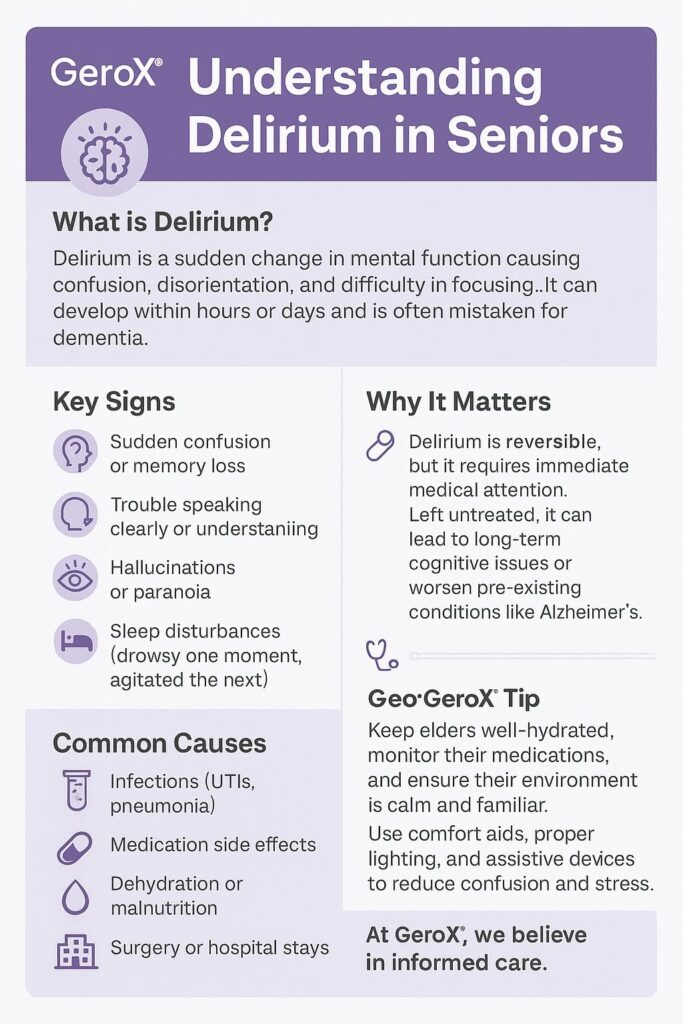
Delirium is one of the most common yet frequently overlooked medical conditions affecting older adults. It is characterized by a sudden change in mental status that develops over hours or days and can cause confusion, disorientation, difficulty concentrating, memory disturbances, and changes in behavior. Because its symptoms often resemble dementia, delirium is frequently misidentified, delaying appropriate treatment and increasing the risk of complications.
Unlike dementia, which usually develops gradually over months or years, delirium appears suddenly and fluctuates throughout the day. An older adult may seem alert and responsive one moment and become confused, agitated, or drowsy shortly afterward. This fluctuating nature is one of the hallmarks of the condition and an important clue for caregivers and healthcare professionals.
Delirium is not a disease in itself but rather a sign that something is affecting the body’s normal functioning. Common causes include infections such as urinary tract infections and pneumonia, medication side effects, dehydration, poor nutrition, uncontrolled pain, surgery, hospitalization, sleep deprivation, and sensory impairments such as hearing or vision loss. In many cases, multiple factors contribute simultaneously, making comprehensive assessment essential.
The condition is particularly important in geriatric care because it is associated with increased hospital stays, falls, loss of independence, cognitive decline, and higher mortality rates. However, one of the most encouraging aspects of delirium is that it is often reversible when the underlying cause is identified and treated promptly. Early intervention can significantly improve outcomes and reduce the risk of long-term complications.
Families and caregivers play a crucial role in recognizing the warning signs. Sudden confusion, unusual forgetfulness, difficulty following conversations, hallucinations, disrupted sleep patterns, personality changes, or fluctuating levels of alertness should never be dismissed as a normal part of aging. These symptoms warrant prompt medical evaluation, particularly when they appear abruptly.
Prevention is equally important. Maintaining adequate hydration, ensuring proper nutrition, reviewing medications regularly, encouraging physical activity, promoting healthy sleep habits, and supporting hearing and vision needs can all help reduce the risk of delirium. Familiar surroundings, clear communication, calendars, clocks, and the presence of trusted family members can further support orientation and reduce distress.
At GeroX®, we believe that informed caregiving is one of the most powerful tools in promoting healthy aging. Understanding delirium enables families to act quickly, seek timely medical attention, and protect the health and dignity of older adults. Awareness saves lives, and early recognition can make a profound difference in recovery and quality of life.
بزرگوں میں ڈیلیریئم کو سمجھنا: بروقت پہچان کیوں ضروری ہے؟
ڈیلیریئم بزرگ افراد میں پائی جانے والی ایک عام لیکن اکثر نظر انداز کی جانے والی طبی کیفیت ہے۔ اس میں ذہنی حالت میں اچانک تبدیلی آتی ہے جس کے نتیجے میں الجھن، بے ربطی، توجہ میں کمی، یادداشت کے مسائل اور رویے میں تبدیلی پیدا ہو سکتی ہے۔ چونکہ اس کی علامات بعض اوقات ڈیمنشیا سے ملتی جلتی ہوتی ہیں، اس لیے بہت سے خاندان اور بعض اوقات طبی عملہ بھی اسے غلط سمجھ لیتا ہے، جس سے علاج میں تاخیر ہو سکتی ہے۔
ڈیمنشیا کے برعکس، جو آہستہ آہستہ کئی مہینوں یا سالوں میں ترقی کرتا ہے، ڈیلیریئم چند گھنٹوں یا دنوں میں اچانک ظاہر ہو سکتا ہے۔ ایک بزرگ شخص ایک لمحے میں بالکل معمول کے مطابق بات کر رہا ہو اور اگلے ہی لمحے شدید الجھن یا غنودگی کا شکار ہو جائے۔ یہی اچانک اور بدلتی ہوئی کیفیت اس بیماری کی اہم پہچان ہے۔
ڈیلیریئم بذاتِ خود ایک بیماری نہیں بلکہ اس بات کا اشارہ ہے کہ جسم میں کوئی طبی مسئلہ موجود ہے۔ اس کی عام وجوہات میں انفیکشن، خصوصاً پیشاب کی نالی کے انفیکشن اور نمونیا، ادویات کے مضر اثرات، پانی کی کمی، غذائی قلت، درد، آپریشن، ہسپتال میں داخلہ، نیند کی کمی اور سماعت یا بینائی کی کمزوری شامل ہیں۔ اکثر ایک سے زیادہ عوامل بیک وقت اس کیفیت کا سبب بنتے ہیں۔
جیریاٹرک یا بزرگوں کی نگہداشت میں ڈیلیریئم کو خاص اہمیت حاصل ہے کیونکہ یہ ہسپتال میں قیام کے دورانیے کو بڑھا سکتا ہے، گرنے کے خطرے میں اضافہ کر سکتا ہے، خودمختاری کم کر سکتا ہے اور ذہنی کارکردگی کو متاثر کر سکتا ہے۔ خوش آئند بات یہ ہے کہ زیادہ تر صورتوں میں اگر اصل وجہ کو بروقت پہچان لیا جائے تو ڈیلیریئم قابلِ علاج اور قابلِ واپسی ہوتا ہے۔
خاندان کے افراد اور نگہداشت فراہم کرنے والے افراد اس کیفیت کی ابتدائی شناخت میں بنیادی کردار ادا کرتے ہیں۔ اگر کسی بزرگ میں اچانک الجھن، غیر معمولی بھول چوک، گفتگو سمجھنے میں مشکل، وہم، نیند کی خرابی، مزاج میں غیر معمولی تبدیلی یا ہوشیاری کی سطح میں اتار چڑھاؤ پیدا ہو تو اسے عمر بڑھنے کا معمول سمجھ کر نظر انداز نہیں کرنا چاہیے۔ ایسی علامات فوری طبی معائنے کی متقاضی ہوتی ہیں۔
ڈیلیریئم کی روک تھام بھی ممکن ہے۔ مناسب مقدار میں پانی پینا، متوازن غذا، ادویات کا باقاعدہ جائزہ، جسمانی سرگرمی، معیاری نیند اور سماعت و بصارت کی ضروریات کو پورا کرنا اس خطرے کو کم کر سکتے ہیں۔ پرسکون اور مانوس ماحول، واضح گفتگو، گھڑی، کیلنڈر اور خاندان کے افراد کی موجودگی بھی ذہنی الجھن کو کم کرنے میں مدد دیتی ہے۔
GeroX® میں ہمارا یقین ہے کہ باخبر نگہداشت صحت مند بڑھاپے کی بنیاد ہے۔ ڈیلیریئم کے بارے میں آگاہی خاندانوں کو بروقت فیصلہ کرنے، مناسب طبی مدد حاصل کرنے اور اپنے بزرگ عزیزوں کی صحت، وقار اور معیارِ زندگی کے تحفظ میں مدد دیتی ہے۔ جلد تشخیص اور فوری توجہ نہ صرف بہتر صحتیابی کا باعث بنتی ہے بلکہ زندگیوں کو بھی محفوظ بنا سکتی ہے۔