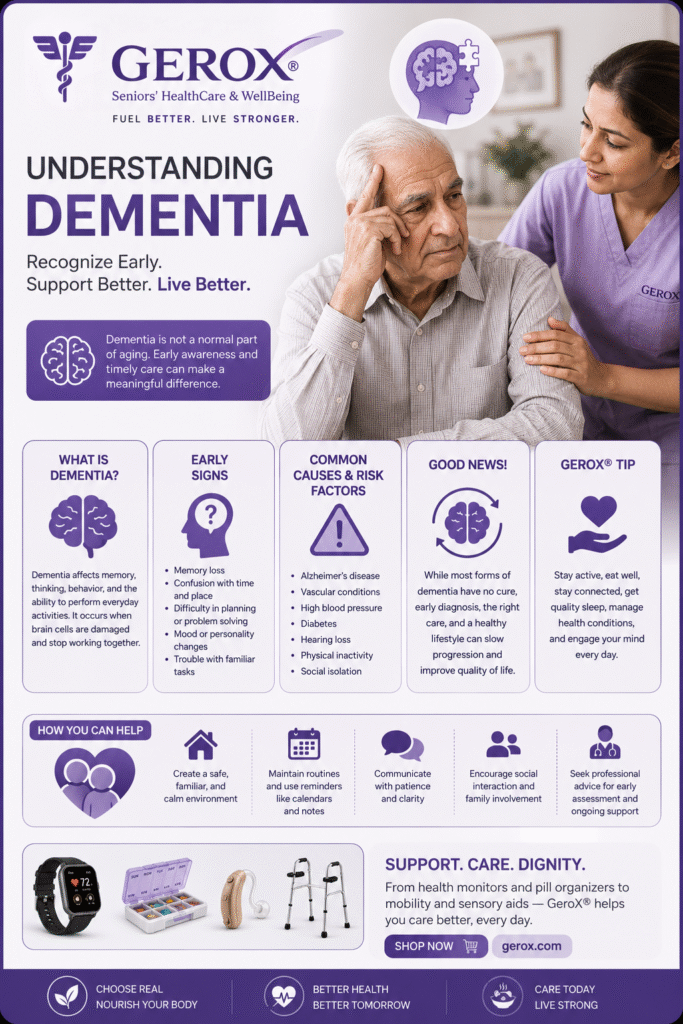
Dementia is not a single disease but a group of conditions that affect memory, thinking, behavior, and the ability to perform everyday activities. It develops when brain cells become damaged and can no longer communicate effectively with one another. Although dementia is more common in older adults, it is not a normal part of aging. Millions of families worldwide are affected by dementia, making awareness and early recognition essential for improving quality of life.
One of the earliest signs of dementia is persistent memory loss that interferes with daily activities. Individuals may repeatedly ask the same questions, forget recent conversations, misplace items, or struggle to remember appointments and important events. As the condition progresses, difficulties with planning, problem-solving, communication, and decision-making may become more apparent. Tasks that were once routine, such as managing finances, preparing meals, or following familiar routes, may become increasingly challenging.
Dementia can also affect mood, personality, and behavior. A person may become withdrawn, anxious, suspicious, irritable, or depressed. Some individuals experience confusion about time and place, difficulty recognizing familiar faces, or changes in judgment and social behavior. These symptoms can be distressing for both the individual and their family members, often leading to emotional and caregiving challenges.
The most common form of dementia is Alzheimer’s disease, but other types include vascular dementia, Lewy body dementia, and frontotemporal dementia. While the causes and progression of these conditions may differ, they all affect cognitive function and independence. Risk factors include advanced age, cardiovascular disease, diabetes, hypertension, smoking, physical inactivity, hearing loss, social isolation, and a family history of dementia.
Although there is currently no cure for most forms of dementia, early diagnosis can make a significant difference. Timely medical assessment allows individuals and families to access treatments, support services, cognitive therapies, and future care planning. In some cases, symptoms that resemble dementia may be caused by treatable conditions such as vitamin deficiencies, medication side effects, depression, thyroid disorders, or infections. This makes professional evaluation particularly important.
Research increasingly shows that a healthy lifestyle may help reduce the risk of cognitive decline. Regular physical activity, a nutritious diet, good sleep, hearing care, social engagement, lifelong learning, and management of chronic diseases all contribute to brain health. Small, consistent lifestyle choices can have a meaningful impact on maintaining cognitive function as we age.
At GeroX®, we believe that awareness is the first step toward compassionate and effective care. Understanding dementia helps families recognize early warning signs, seek appropriate support, and create environments that promote dignity, safety, and quality of life. While dementia presents many challenges, informed caregiving and timely intervention can help individuals continue to live meaningful and fulfilling lives.
بزرگوں میں ڈیمنشیا کو سمجھنا: علامات، آگاہی اور بہتر نگہداشت
ڈیمنشیا کوئی ایک بیماری نہیں بلکہ ایسی طبی کیفیات کا مجموعہ ہے جو یادداشت، سوچنے کی صلاحیت، رویے اور روزمرہ زندگی کے کام انجام دینے کی صلاحیت کو متاثر کرتی ہیں۔ یہ اس وقت پیدا ہوتی ہے جب دماغی خلیات متاثر ہو جاتے ہیں اور آپس میں مؤثر طریقے سے رابطہ قائم نہیں کر پاتے۔ اگرچہ ڈیمنشیا عمر رسیدہ افراد میں زیادہ عام ہے، لیکن اسے بڑھتی عمر کا معمولی حصہ نہیں سمجھنا چاہیے۔ دنیا بھر میں لاکھوں افراد اور ان کے خاندان اس کیفیت سے متاثر ہیں، اس لیے اس کے بارے میں آگاہی انتہائی ضروری ہے۔
ڈیمنشیا کی ابتدائی علامات میں ایسی یادداشت کی کمزوری شامل ہے جو روزمرہ زندگی کو متاثر کرنے لگے۔ متاثرہ فرد بار بار ایک ہی سوال پوچھ سکتا ہے، حالیہ گفتگو بھول سکتا ہے، اشیاء گم کر سکتا ہے یا اہم ملاقاتوں اور واقعات کو یاد رکھنے میں دشواری محسوس کر سکتا ہے۔ وقت کے ساتھ منصوبہ بندی، مسائل حل کرنے، گفتگو کرنے اور فیصلے کرنے کی صلاحیت بھی متاثر ہو سکتی ہے۔ وہ کام جو پہلے آسان تھے، جیسے مالی معاملات سنبھالنا، کھانا تیار کرنا یا مانوس راستوں پر سفر کرنا، مشکل بن سکتے ہیں۔
ڈیمنشیا صرف یادداشت تک محدود نہیں رہتی بلکہ مزاج اور شخصیت کو بھی متاثر کر سکتی ہے۔ بعض افراد پریشان، غصے والے، مشکوک، افسردہ یا سماجی طور پر الگ تھلگ ہو جاتے ہیں۔ وقت اور جگہ کے بارے میں الجھن پیدا ہو سکتی ہے، مانوس چہروں کو پہچاننے میں دشواری ہو سکتی ہے اور سماجی رویے میں تبدیلی آ سکتی ہے۔ یہ تبدیلیاں نہ صرف متاثرہ فرد بلکہ خاندان کے لیے بھی جذباتی اور عملی چیلنجز پیدا کرتی ہیں۔
الزائمر بیماری ڈیمنشیا کی سب سے عام قسم ہے، لیکن اس کے علاوہ ویسکولر ڈیمنشیا، لیوی باڈی ڈیمنشیا اور فرنٹو ٹیمپورل ڈیمنشیا بھی موجود ہیں۔ مختلف اقسام کی وجوہات اور علامات میں فرق ہو سکتا ہے، لیکن سب دماغی کارکردگی اور خودمختاری کو متاثر کرتی ہیں۔ عمر، دل کی بیماریاں، ذیابیطس، ہائی بلڈ پریشر، سماعت کی کمزوری، جسمانی غیرفعالیت، تنہائی اور خاندانی تاریخ اس کے خطرے کو بڑھا سکتے ہیں۔
اگرچہ زیادہ تر اقسام کا مکمل علاج ابھی دستیاب نہیں، لیکن بروقت تشخیص انتہائی اہم ہے۔ جلد تشخیص سے مناسب علاج، معاون خدمات، ذہنی بحالی کے پروگرام اور مستقبل کی منصوبہ بندی ممکن ہو جاتی ہے۔ بعض اوقات یادداشت کی خرابی وٹامن کی کمی، ادویات کے مضر اثرات، افسردگی، تھائیرائیڈ کے مسائل یا انفیکشن کی وجہ سے بھی ہو سکتی ہے، جو قابلِ علاج ہوتے ہیں۔ اس لیے طبی معائنہ بہت ضروری ہے۔
تحقیقات سے معلوم ہوتا ہے کہ صحت مند طرزِ زندگی دماغی صحت کے تحفظ میں اہم کردار ادا کرتا ہے۔ باقاعدہ ورزش، متوازن غذا، معیاری نیند، سماعت کی دیکھ بھال، سماجی روابط، مسلسل سیکھنے کی عادت اور دائمی بیماریوں کا مناسب علاج ذہنی صلاحیتوں کو برقرار رکھنے میں مددگار ثابت ہو سکتے ہیں۔ روزمرہ کی چھوٹی لیکن مستقل مثبت عادات طویل مدتی دماغی صحت پر گہرے اثرات مرتب کرتی ہیں۔
GeroX® میں ہمارا یقین ہے کہ آگاہی مؤثر نگہداشت کی بنیاد ہے۔ ڈیمنشیا کو سمجھنے سے خاندان ابتدائی علامات کو پہچان سکتے ہیں، بروقت مدد حاصل کر سکتے ہیں اور اپنے بزرگ عزیزوں کے لیے ایسا ماحول فراہم کر سکتے ہیں جو عزت، تحفظ اور بہتر معیارِ زندگی کو فروغ دے۔ مناسب معلومات اور ہمدردانہ نگہداشت کے ذریعے ڈیمنشیا کے ساتھ بھی ایک بامقصد اور باوقار زندگی ممکن ہے۔